
Two Times In
Introducing this newsletter

Last July (2024), I felt a sense of anxiety. Long story short, I had begun to ruminate over really inconsequential things from four years ago, and I was also plagued with a sense of loneliness and feelings of being misunderstood—in high school, this led to me being very obsequious and desperate for friendships, even with people who weren’t inclined to reciprocate. Part of it stemmed from the fact that I wanted intellectual engagement alongside social interactions. I’ve always felt like a really stupid idiot who’s only tolerated out of courtesy. This could be because I would primarily befriend those who appeared intelligent and cynical.
Yet, the Holden Caulfield I was looking for was nowhere to be found. I hadn’t met many people who could—or at least tried to—see through the meretriciousness that characterized my peers or valued a friend to catch them in the rye. I am comprised of numerous flaws, but I was a true friend—even a true believer, as Eric Hoffer would put it, except that what I naively believed in was the notion that I could be lost in other people, and avoid having to face my inadequacies.
I knew one thing about myself at the time; that I was almost a marionette at the hands of other people … and certainly a doormat. I would wear my heart on my sleeve, and struggled to truly be happy, but any moment that I could escape my loneliness would be a temporary antidote from my self-inflicted torment. I was also influenced by a sundered friendship—and unrequited (and unexpressed) love on my part—and I hated that I couldn’t be detached. All the other students in high school could treat each other as interchangeable units … so why couldn’t I? And, of course, my penchant for melancholy was one reason for that sundered friendship.
I was also very aimless. While I still have ambitions about the very far future, I’m not especially decisive. I usually spent my lunchtimes alone, and so I’d find some spots to hang out in. Perhaps a corner, perhaps a table in a hallway. Or, I’d just walk around and talk to myself. I was essentially a vagrant in my own life, and one could think that I was a stoner. One of the teachers would always ask why I was lurking, to the point that my nickname was “lurker”.
I suspect that’s how many knew me: an overemotional and creative basket case with a good heart, who didn’t have much to offer in terms of cogent rationality or intelligence. So why not own it? Why not bring my flaws out into the open and, er, reclaim it? Everyone does that nowadays. Didn’t women reclaim the “I’m just a girl teehee” bimbo schtick? Sure, it throws a wrench into the face of everything egalitarianism stands for, but at least you can live out your basest impulses while calling it empowerment!
I wouldn’t post any photos of myself (save for my profile picture, which was taken at my high school graduation1)—partly because I’ve never been a fan of my looks, but more importantly, I wanted to be valued for my mind and personality. Not merely for “being kind” either; in my experience, people who specifically value someone for their kindness typically intend to take this quality for granted. I started a Substack newsletter titled The Lurking Ophelia, thinking it to be a fitting name.
While the “to be or not to be” soliloquy is attributed to Hamlet, I suppose that Ophelia asked herself similar questions before she drowned herself—given that she did indeed drown, she wasn’t a witch2. For me, the million dollar question, really, was to know if someone could see me for who I truly am, and still respect me. Do I present any positive utility in this world? Do I have any intellectual substance?
If Saul Can Become Paul, Could Ophelia Become Minerva?
When I first started my account, I was planning to write about fairly anodyne and esoteric topics such as self-actualization. Having recently discovered TOOL’s music, I wanted to write something that elicited the same feelings I got when I listened to the Lateralus and Ænema albums—all these references to psychoanalysis and arcane New Age-y stuff do provide you with the impression of having acquired forbidden knowledge.
That’s not to say that I didn’t have an interest in controversial topics, or learning things outside my own Overton window—after all, it is much easier to be eclectic in one’s thinking if one’s source of information is decentralized. Mainstream political discourse lacks psychological decoupling, and as such, is split into a binary where you’re either an SJW who will write 500 word essays about why the original Mountain Dew is the most anti-racist flavor, or you’re a neoconservative who thinks Ben Shapiro is avant garde. My views on various topics are still rather inchoate, but writing was a great endeavor towards dissecting my own views on important topics—I became more adept at ordering some key ideas, and have come to see the bridges between each disjointed concept as reasoning.
One of these topics is that of Israel and Palestine. While I make no bones about my strong opinions on the matter, I have always regretted that it is hijacked into a culture war issue. For instance, prior to starting my newsletter, my defiant efforts in trying to avoid the influence of my rather social justice-inclined English teacher in high school had allowed the woke/based matrix to direct my thinking. Yet, when I honestly asked myself whether war crimes could be so easily justified with a few utterances about “terrorists” and “radical Islamists”, I had to conclude that one would have to be fetishistic with their application of Hanlon’s Razor3 if they wanted to, say, justify the Hind Rajab events.
My inclination to change my own mind made me hopeful that others might do the same as well, and that enough minds could be reached through discourse. This is what made it increasingly likely that my kryptonite would become arguing with people on the internet—if I don’t subject my views to constantly be challenged, how would I know if I wasn’t holding them irrationally? I still believe this, and I still find Aumann’s Agreement Theorem somewhat compelling, but I also think that if someone starts with irreconcilable axioms and foundations, it’s unwise to argue with them while holding the impression that sufficient information will change either of our minds.
For instance, I cannot force you to see blue if you are wearing red glasses, and vice versa. Sure, in order to resolve the argument, maybe I could put a given object through spectroscopy and say that blue is defined as 350 nm, but we would have to agree on the definition in the first place4, or have some other shared assumption. Even philosophical arguments often boil down to showing that a specific set of axioms lead to some unpalatable situations (for instance, a doctor harvesting someone’s organs to save five people), but whether they’re deal-breakers also depends on one’s starting axioms.
Partly, I was also a Platonic idealist at heart, aspiring towards some more beautiful forms. That if I could just think well enough, I could transcend my facticity—this is the allure of the internet for me. Yet, in the context of the tripartite soul, my Thymos has more power over me than my Logos. I still struggle to treat people like mere ideology-bags. Here’s another question: if you address someone’s status as a worthy interlocutor rather than their argument, it’s a fallacious ad hominem, but what if they really are acting in bad faith? What do you do then, without seeming as though you can’t handle the truth?
I encountered an interlocutor who claimed that he would “support Jews over Muslims in any modern-day conflict” … because of ISIS’s manifesto. For what it’s worth, I think this is a very lazy “clash of civilizations” schema through which one can choose to view the world, but it’s the norm in ostensibly heterodox spheres because any dissent to it can be strawmanned as “oh you don’t want to bomb Islamic countries? Are you saying that Islam is a religion of peace? Have you seen Sam Harris DESTROY Ben Affleck on the Bill Maher show5?”.
The problem with such a way of seeing things, in my view, is that once you’ve attributed archetypes to collective groups in the conflict, it absolves us of the need to exercise universalism when discussing others in the abstract—if a child’s parents get killed in a bombing, it doesn’t take a genius to see why they might adopt a not-so-peaceful modus operandi in the future. To say that Oct 7th didn’t arrive in a vacuum is considered to be “victim-blaming”, but in these circles, it is somehow acceptable to suggest that Palestinians just hate Israel because they hate Jews, even more than they love their own children. Put in a Golda Meir quote for greater effect.
When thwarting accusations of being an ethnostate (and thus offending Western liberal sensibilities), pro-Israel rhetoric relies on the fact that that Arab and Muslim Israelis, er, exist—when wanting to frame its conflicts as religious in nature, it cites its status as a Jewish state, disliked by neighboring Arab countries and in need of protection because of it being Jewish. Of course, no one broaches the question of why Arab Israelis were killed on Oct 7th if this is just a holy war between Judeo-Christians / secularists / Western Civilization6 and radical Islamists, but that’s besides the point.
When said interlocutor typed his rationale about why he believed that Israel had a stronger case as to why they were experiencing genocide, I wasn’t entirely motivated to treat this argument like a neutral exchange of ideas (given that I already disliked him due to him being uncharitable to many people that I highly respect), but I didn’t want to come across as a coward who was afraid to engage with disagreement. In an effort to have my cake and eat it too, I added a caustic preamble that in the past, I did try addressing his arguments, but such responses went ignored since the interlocutor would just troll someone who was worse at argumentation than I was, and that he was bothering me out of nowhere.
I still remembered my last exchange with him. He had written a polemical Note that completely misrepresented someone else’s article, and approved of some self-proclaimed narcissism hacker psychoanalyzing the original author as possessing “unresolved emotional wounds”7. All I could think was, why should I believe that someone who endorses this rhetoric is intending to argue in good faith? Why should he get the benefit of the doubt by default?
In other words, I let Thymos win against Logos, and Ophelia couldn’t become Minerva.
As they say, if you aim for the king, you best not miss. Similarly, being confrontational to someone who is well able to get under your skin8 is a mistake. It’s understandable to not want to engage in discourse with someone when it’s invariably girded by resentment on my end, but the attempt to privilege my sense of pride (“I would never shirk away from an argument!”) was evident. Once one’s figured out what incentivises someone else (or gives them purpose or meaning), it’s a lot easier to pierce them with words.
This is not really a matter of how intense a given insult is—it’s about high vs. low resolution, and in my indignation, I armed someone with an electron microscope. Enter in the accusations of, say, desperately wanting to convince others of my credibility. Well, guilty as charged—while I wouldn’t let my wish for approval override my sense of ethics or integrity, I would prefer a world where I’m taken seriously in comparison to one where I’m not, all else being equal9.
To that end, I suspect that one reason why irony and facetiousness are so common amongst my generation could be that we have predominantly grown up on the internet. People willing to scoff at others’ authentic expression have existed since forever, but what hasn’t existed is our ability to access them with such ease. Ideally, one adapts by growing a thicker skin, but a suboptimal strategy is to shrug off any darts by hiding your vital organs away such that no attack can really affect you. I fear that this risks compartmentalizing one’s humanity and leads to unintended consequences in real life as well.
The me that you know
He used to have feelings
But the blood has stopped pumping and he is left to decay
The me that you know is now made up of wires
And even when I'm right with you I'm so far away
—Nine Inch Nails, “The Becoming”
The interlocutor ended by remarking that nothing I say has any bearing on anything and that Bibi will continue his campaign anyways. The final nail in the coffin—any meticulous response I wrote was inconsequential in comparison, like someone trying to claw their way out of being buried alive. Buried by the knowledge of my insignificance, that’s what.
Sure, I can make the argument that just because my convictions have no bearing on concrete reality doesn’t mean that I should now support depravity. I don’t subscribe to a purely consequentialist mode of ethics anyways. Yet, amidst the deafening silence across which my words reverberate, do I not already know that I am yelling into a void? I have no problem with the universe not caring about us, because we don’t need it to. We can care about each other, and only when nihilism precludes us from the duty to love should it be held in contempt.
Where you going?
To the bottom?
Do you hear us?
We are rotting
—System of a Down, “Tentative”
If any part of my hero’s journey was to change people’s minds, I had failed, and our princess was in another castle. Given that I was taking myself too seriously on the internet and unwittingly losing the composure I initially started with, perhaps I ought to abandon the quest to save anyone from Bowser. Least of all, I should abandon the quest of turning Ophelia into Minerva, when it’d be easier to turn water into wine.
Now I Have Become Zeus, Thrower of Hephaestuses
Despite being away from the internet, it doesn’t actually seem as though I’ve gained much with regard to peace of mind or intellectual engagement. The reason for starting this blog remains; to be able to discuss grand issues with people who are like-minded, and to prove whether the contents of my mind stand on their own merits. Nearly every article and Note I had written was like a baby to me, and now I feel like Zeus throwing Hephaestus off of a cliff. Every time I put my thoughts into words, fit for anyone to read, that was a creation. Not all creations were good or worth reading, of course, but such a drastic course of action makes me a tad bit melancholic; all my Notes are gone and unrecoverable.
The lesson here is that citing “unplugging” as a panacea to overthinking is rather reductive and relies upon univariate thinking. Unless I can someday carve out my amygdala and throw it in the trash, my mental bruxism will remain a constant in my life, waiting for the right angle from which I can get the best view of an iridescent hell.
What really is the point caring about the Palestinians being killed in Gaza when I can’t change anyone’s fate? I can’t stop a single bomb. I’m not saying I’m a good person, since I don’t even know what that label would entail. I do think I focus on ethics, and it rarely stems from a place of optimism and excitement. It stems from the fact that even in the most anodyne pursuits, I see death and suffering. As a quick example, most imports are made with cheap and exploitative labor in working conditions we would not accept for our loved ones. But if even God couldn’t barricade the Garden of Eden from that one serpent, then does it not reek of hubris to say that I could absolve myself of all culpability?
I will be flying outside the US tomorrow or so—having booked the flight a couple of months ago, I didn’t really pay attention to the fact that the flight(s) I’ve booked are from UAE airlines, and that country’s supplying the RSF with weapons. One can see the blood in Sudan from aerial images, but I’d have to be blind to not notice it on my hands.
My life is a net negative no matter what I do. Despite there existing people who love me, I can’t help but think that they just don’t know me well enough. That if they knew me like I knew myself, I’d be worthy of contempt and not love, respect or admiration. For instance, my parents don’t know that when I sit down to study, I end up getting distracted on the internet more times than I can count; the reason I’m a mediocre student isn’t so much that the courses are inherently difficult, but because I am the least conscientious person I know. Some part of me still vies for people to disprove my assumptions, and show me that I’m not merely an ineffectual nobody masquerading to be an intellectual.
To that end, there’s a level of authenticity that only anonymity can truly allow. Or, perhaps it’s not that. When I look in the mirror, I see someone meek and acquiescing; there’s a degree of dissonance that prods at me when I speak in a forthright manner. The slouching girl with eye bags who can’t even throw a punch. I’m also not ambitious enough to have founded three or more start-ups at my age. I’m not an A+ student, and I’d be lucky to get into medical school at this rate. What if people who know me personally learned of all my shortcomings as well? Most likely, the only reason they tolerate me is because they don’t know me; at best, I’m harmlessly endearing in the sense that old women can pinch my face and call me a baby.
I doubt that my online presence is akin to Mr. Hyde. I suppose that short story strongly relates to Jung’s conception of the shadow and how we must integrate it, but I find that I need to integrate my light, because I’m roleplaying whenever I strive to take myself seriously in real life. You’re no hero, and no intellectual. At best, you’re a pretentious charlatan. You’re a dry powder inhaler in the real world. Vaguely sweet, yet a whole lot of nothing.
“I’m only faking, when I get it right.”
I’m aware I made references to Platonic idealism, and in some sense, all I ever wanted to do was produce some astral projection made of pure intelligence. Peel it back, and it’s just another way to escape the messier aspects of myself. Or, rather, kill myself without ending my life. I’ve called my bluff far too many times on the issue of suicide; it’s a fantasy, but not something I’ll ever attempt, because I’m scared of death. I don’t believe in an afterlife, but I can’t help but look at the stars sometimes and hope that the people I love will be there (as opposed to being gone forever).
I say I want to kill myself, but truth be told, I’m also struggling to define said self. Is it the set of irksome and boring idiosyncrasies that make themselves apparent whenever I speak? Or am I the glimpses of grandiloquence and half-decent ideas that appear in my writing at times and make me appear wise beyond my years? Is my only redeeming quality a crippling self-awareness that manifests in apologizing for everything in the world? Do people pity me? Hey, I might be incompetent at Organic Chemistry or circuits or Gauss’ Law, but at least I can name-drop Chomsky and Kaczynski! At least I’m a deeeeeep thinker!
Much like software developers program backdoors into their software, I too have a failsafe—an intellectual infidelity built of indecisiveness and an inability to commit to any concrete goal. My actions and outlook, girded by cowardice. What else is new?
My tentative conclusion is that my existence is a bullet that’s been shot at the fabric of reality; by no means is it good for the world and the counterfactual (me not existing, It’s a Wonderful Life-style) would be better, but one thing I’ve read on the internet is that if you take a bullet out of a gunshot wound, it’ll lead to exsanguination, and the person you’re trying to save will die10. Similarly, it’s too late for me to take myself out of the equation, because my existence is a sunk cost and there would be some stakeholders who’d feel really sad if it were to end. With the exception of Casey Anthony types, most parents feel a lot of love towards their children, thanks to evolution—it doesn’t mean I’ve earned said love, but causing them pain is the last thing I’d want to do.
I know that we shouldn’t preemptively make judgments about our worth or whatever, but it’s been 19 years—in a month or so, I’ll turn 20. At what point do I just concede that some things can’t be changed? No one else’s flaws seem to render them so … defective.
Drowning … in the Déjà Vu
At the time of writing this, I have just completed all of my finals. Out of all of them, the one that causes me the most pain is the Calc III one, because, well, this wasn’t how the exam was supposed to go. I was supposed to have done well, and I was supposed to have been able to escape the event horizon of the B+. Instead, despite two days of thorough studying, I stared blankly at my answer sheet and wondered why there were so many questions. Why was there so little time? Even my thumb wouldn’t cooperate, and it would involuntarily curl towards my palm. I will be lucky to get a C in the course; all this hope and all these aspirations amounted to absolutely nothing— instead of a completed exam, I left behind evidence of me being an airhead with no intellectual acumen.
Every year, I arrived to the same conclusion: be more consistent in your studying, be focused, don’t procrastinate. For the first few months, I actually start to believe I could be more than who I was in the past … until I call my bluff. I salvage my ego by lying to myself and saying that I’ve learned a tough lesson and that it’ll all be different the next time around. It’s the same cycle of self-deception and self-preservation, all so that I can go to sleep at night, just to wake up and mess everything up all over again.
Instead of asking a genuinely pertinent question during office hours, I talked about philosophy—specifically, my nigh-obsession with presenting positive utility to the world. Only God knows why. One possible reason is that it’s just embarrassing for me to sincerely admit when I don’t understand something in class or that I need to put in actual effort (as opposed to being one of those people with sharp minds). It could be that I lack a social life (and the requisite skills) to the point that I end up conversing with my professors instead, much to their irritation.
Whatever the answer to that “why?!” may be, the overarching pattern is that I struggle to cultivate the tenacity needed to take responsibility for my existence, at least consistently or in a truly self-directed manner; most of the time when I was writing this essay, I was procrastinating on something. The magic catechism is “burnout”, as if I just need “self-care”; what a self-soothing lie, when what I need is self-discipline and agency—when I’m someone who could’ve been a star, but the points have been sanded off and now I’m just a blunt pentagon. I have only myself to blame; born with a silver (or at least brass) spoon in my mouth, and I managed to throw it away in favor of rusting iron.
The rust matches the blood on my hands, and I can’t tell whether all of the blood’s owed to my culpability, or whether some of it’s due to my attempts to atone by crucifying myself with golden nails. That’s where all this overthinking, people-pleasing, and melancholy stems from, doesn’t it? The desire to be a good person… only in the same way that a dead person is. But existence has externalities encoded; from corporeal sustenance to, er, living in a society, I can only do my best to reduce harm—but a corpse wins that competition easily. That’s why, if anything, I need to ensure that my life’s posed enough utility to make up for the costs that had to be borne to sustain it.
It doesn’t matter how I feel about it; that’s a comforting, yet tough pill to swallow. It means that I no longer have to focus on attaining some sanguine outlook towards injustice when it doesn’t befit me, but instead of retreating into a womb of melancholy (and awaiting some umbilical noose), I just have to carry on.
Truly, I don’t have an optimistic or edifying conclusion with which I can end this essay. Should I seek solace in some lines about distinguishing myself from a somnambulist and saccharine society? Should I just redefine the parameters such that I’m not the failure I’ve shown myself to be?11 Well, I’m too exasperated to put a flair to my flaws and shortcomings—there are too many of them. I don’t feel like dressing up in graduation clothes and taking a photo next to gothic school decorations again, or acting as though I constitute some compelling character. I am obviously too recalcitrant, stubborn, and proud to be a damsel in distress. I think I’ve adequately outlined how every attempt to be heroic just blows up in my face.
I'm a hero in the bright light
In this world of false illusions in my head
I'm a zero in the dark night
I'm a prisoner I'm hostage to the light
—Lacuna Coil, “Hostage to the Light”
I suppose this post is just an attempt to be honest about who I am or what I’ve done. I don’t want to aggrandize myself when it is so at odds with my reality of underachievement and failure. People who know me through my writing (ie everyone familiar with my previous account on the ‘Stack) are likely to have been dazzled by my use of literary devices and pretentious impression of depth—as flattered as I am, look at my writing now. Any impression of commentary on issues greater than myself has been abandoned, in favor of decadent self-pity and emo kvetching. Notice that I used passive voice for the last sentence in order to convey a more proper register. It’s tricks like these that make someone seem more intelligent and thoughtful than they really are.
Yet, now that I’ve drawn back the curtains and explicated both the origins and the termination of my past alias, it should be clear that this newsletter is a rather self-centered endeavor—a crutch for me to express myself on my own terms. Tortured figurative language and disjoined trains of thought, laden with the sort of self-seriousness that could only be seen from someone who has so little perspective. Really, all I can promise is an inability to pretend that the crowns of thorns I possess are actually glamorous halos. That only really works in paintings, and even then, my artistic skills are rather lacking.

If you, the reader, are still here, reading through the thoughts of a very flawed 19-year-old, I suppose there’s no accounting for taste; don’t say I didn’t warn you. Though I haven’t expressed anything deserving of others’ time and attention, I’m grateful for it either way. So welcome, and enjoy your stay.
Flower Power and stuff, bro…

Nor was Ophelia made of wood!
To the point of surpassing John Doe from Se7en.
I suppose the problem of the criterion kind of gets into this, but I’m not too sure.
To be clear, I don’t have any issue with this video in a vacuum. But I do think that people make too many univariate geopolitical analyses that leave out important details. At the time that this video was making the rounds, the discussion was largely about the refugee crisis in Syria and whether Europe should take them in. Shouldn’t the discussion have been more about whether Operation Timber Sycamore (and the efforts to oust Bashar Al-Assad) and US interventionism was actually helpful for the Syrians?
Similarly, when I see memes of Iran (usually decrying how women could wear short skirts before 1979), it tends to be that no one posting that content is aware of the 1953 CIA-backed coup d’etat, nor SAVAK.
Choose the buzzword you want—the point is that emotive conjugation helps establish in-group rhetoric.
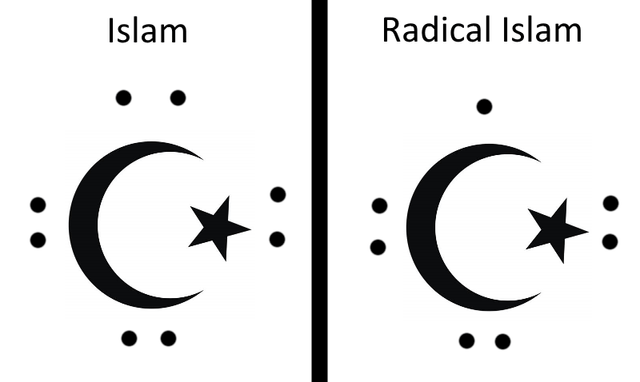
Pop psychology already suffers from a gross lack of falsifiability in favor of vibes-based archetypes, but when it appeals to existing political affiliations, I would be very skeptical of it. In particular, this is a prime example of an ad hominem; discredit the interlocutor because of the view … but refuse to engage with why that view is dissonant with you.
There are disaffected children in every political quadrant (and in atomized societies such as in the West, there are plenty of children who could’ve benefitted from a hug), so without statistics or any other sort of evidence, it’s easy for any just-so story to be conjured up. It’s not that war crimes are bad, it’s all just Cluster B, guyz! If you can just call someone crazy, then why would you want to see their perspective? Not everyone is a Kaczynski connoisseur like me.
Given that I argue with people twenty years older than me, this is bound to be the case.
Smart people say “ceteris paribus”.
Having located the article, it turns out that it was talking about knives instead.
When you put a knife in someone it damages them but the knife is also like a plug, helping to seal any blood vessels etc that have been severed. By pulling it out you unplug these vessels and worsen the bleeding. Did you know that when Martin Luther King Jr. was stabbed with a letter opener, everyone wanted to pull it out? He refused and was taken to hospital, where the blade was safely removed. It turned out that letter opener was resting on his aorta and extracting it would probably have killed him.
Try finding the Jacobian for that change in variables.
My life took a strange turn right around 20. I seem to recall an intense period of uncertainty, all dark and dull like one too many Tylenol PMs, then delirious joy. Won't clutter your comments with it but the world is a wild place and just when you think you got any sort of handle on it is when you're due a reminder you do not.
Looking forward to these. Cheers!
I wish I would write the comment this piece deserves. You make difficult things understandable and relatable, and offer further direction to readers, if they want to pursue anything. So glad you're back!